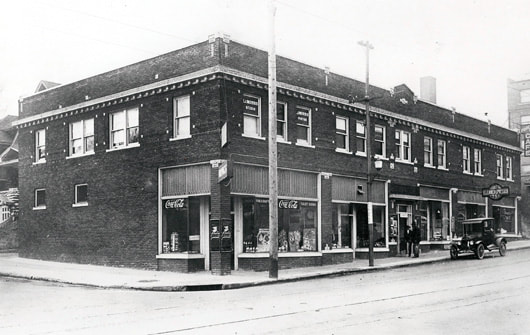
 One hundred years ago, in the late summer of 1923, Walt Disney was living and working on the second floor of the Laugh-O-Gram building, then known as the McConahay Building. It had been built only a couple years earlier and was designed by noted KC architect Nelle Peters. Walt was in desperate circumstances. He had exhausted the funds he had raised from local business people. He was paying his staff with shares of stock in his company and some of them were seeking employment elsewhere. Walt’s response to these dire straits was to undertake his most ambitious project yet. 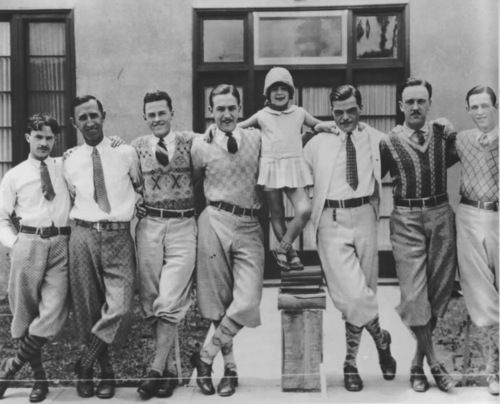 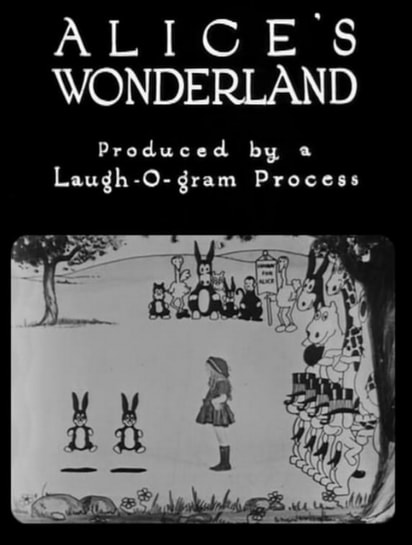 He cast four-year-old Virginia Davis in the role of Alice in what became the first episode of “The Alice Comedies”, his first film series in California. “Alice’s Wonderland” was a clever reversal of a special effects technique developed by the Fleischer Brothers in their “Out of the Inkwell” series. They featured cartoon characters in a live action world. Walt’s idea was to feature young Virginia Davis as a live-action Alice in a cartoon wonderland.
When Walt departed from Union Station on a Santa Fe train bound for Hollywood, he took with him that one reel of film which became the foundation for the entire Walt Disney Company. -Dan Viets Shortly after founding Laugh-O-gram Films, Walt decided he could no longer afford the expense of keeping his apartment. He moved into the Laugh-O-gram building and it became both his home and his place of employment. As he slept there at night, he heard mice come out looking for the crumbs from his employees’ lunches which were tossed into a wire wastebasket. He began to put out food for these mice, luring them closer to him each night. He said that one muse was braver than the others and eventually that mouse became tame and played on Walt’s drawing board while he worked. The mouse stayed in a drawer of his desk and in a small cage Walt bought for him. 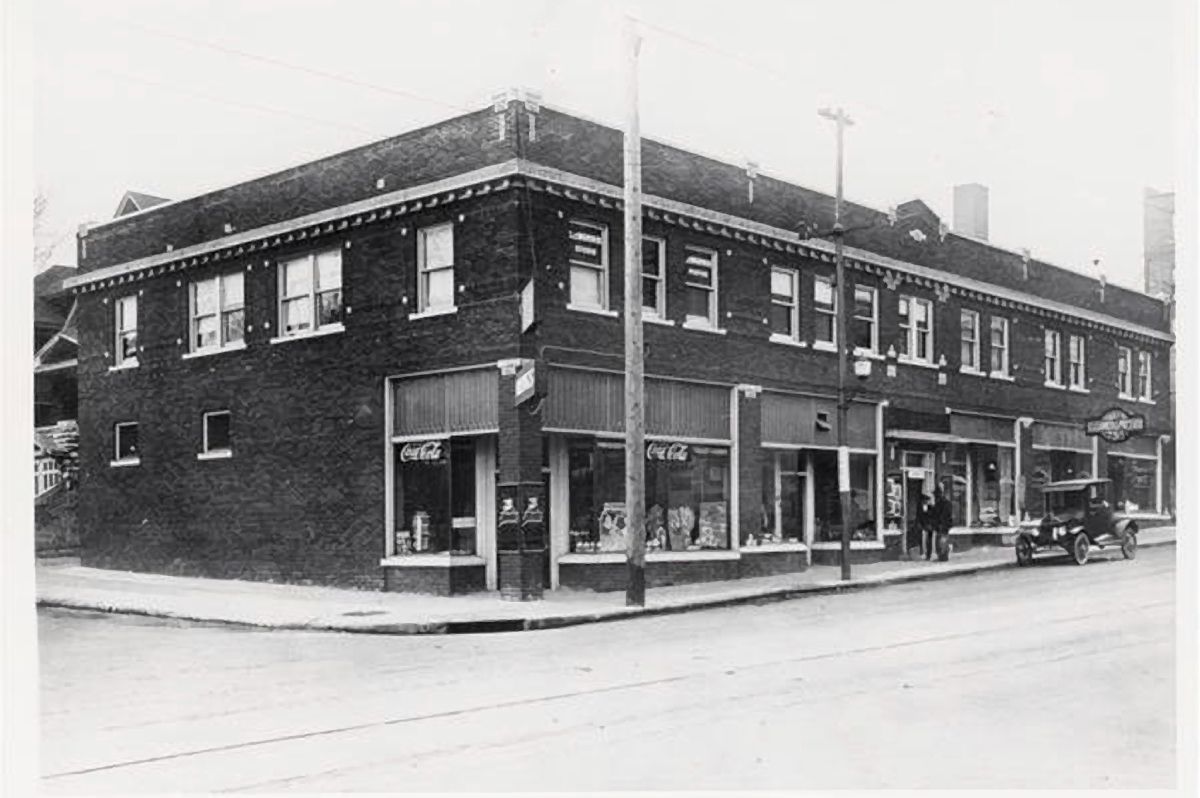 A look back to 1922 to see the world of Walt Disney at the Laugh-O-gram Studio is black & white view of that world. Since color photography did not become commonplace until decades later, our view of Disney in Kansas City lacks the life and vibrancy of full color. Deb Pieti, however, is helping Laugh-O-gram devotees change that. Deb is an accomplished photo digital artist who specializes in colorizing old black & white photos. Deb is working with Thank You Walt Disney, the non-profit that owns and is renovating Walt Disney’s Laugh-O-gram Studio in Kansas City, to create colorized versions of Laugh-O-gram photos that will be displayed in the renovated building. Here is an example of one of Deb’s completed projects: 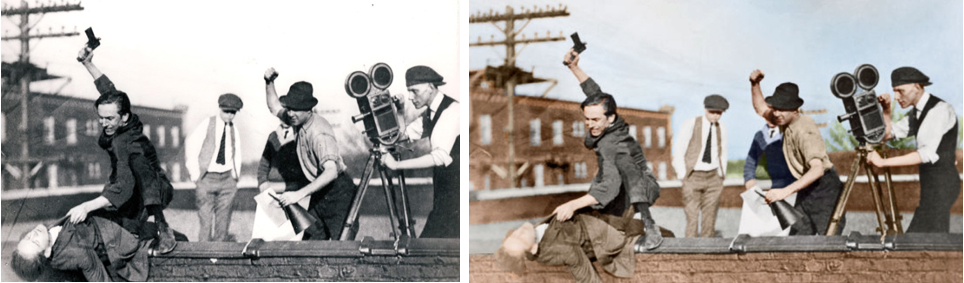 The original black & white photo was taken on the roof of the McConahay building during a filming session of Walt and his Laugh-O-gram crew. Note how Deb’s colorized version brings that scene to life! Her colorized photos will help Laugh-O-gram visitors gain a greater sense of immediacy during their visit to Walt’s former studio. Here is another example of her work to date on photos relevant to Walt’s time at Laugh-O-gram in Kansas City: 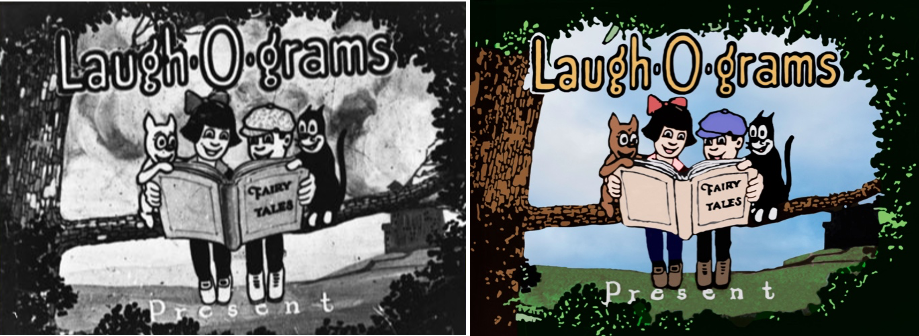 You have probably seen this black & white title logo from one of the Laugh-O-gram films. Deb’s use of vivid colors brings refreshing energy and spark to that artwork. 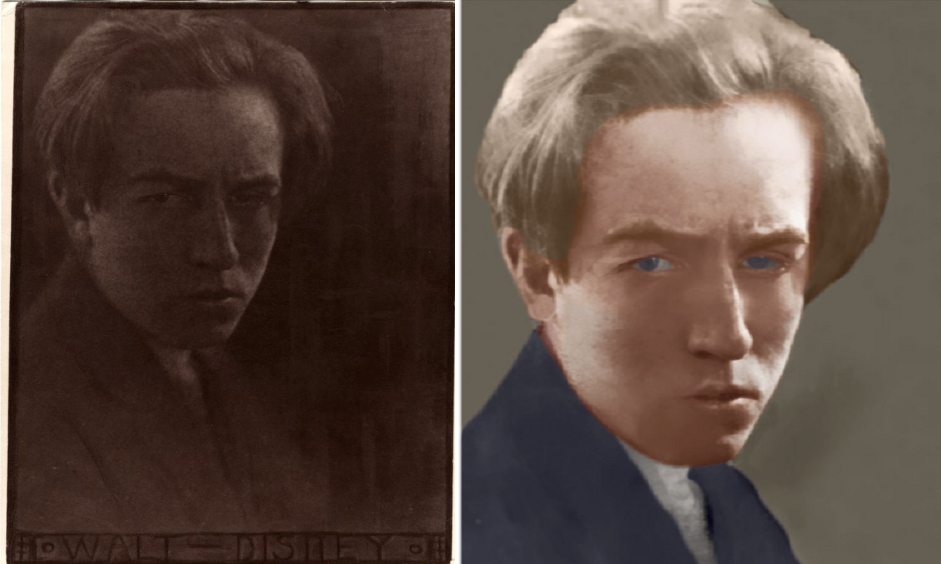 Deb also used her photo retouching skills to help this 1920’s Baron Missakian photo transform from a sepia toned artifact to a dynamic image of the brooding young Disney.
Source: Thank you Walt Disney 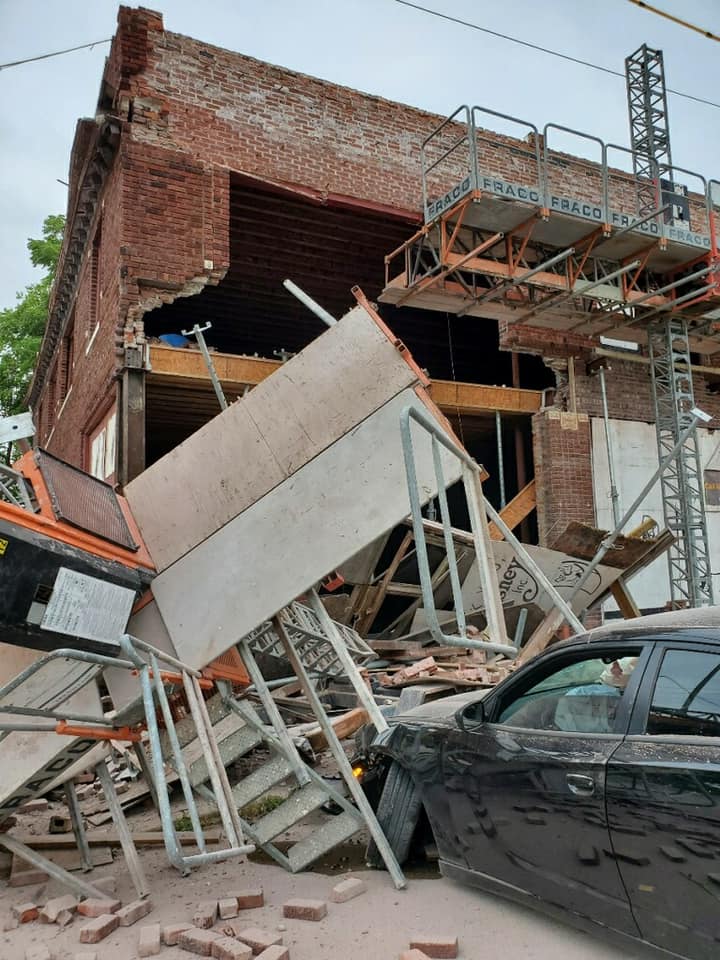 credit: laugh-o-gram studios Laugh-O-gram Slam!
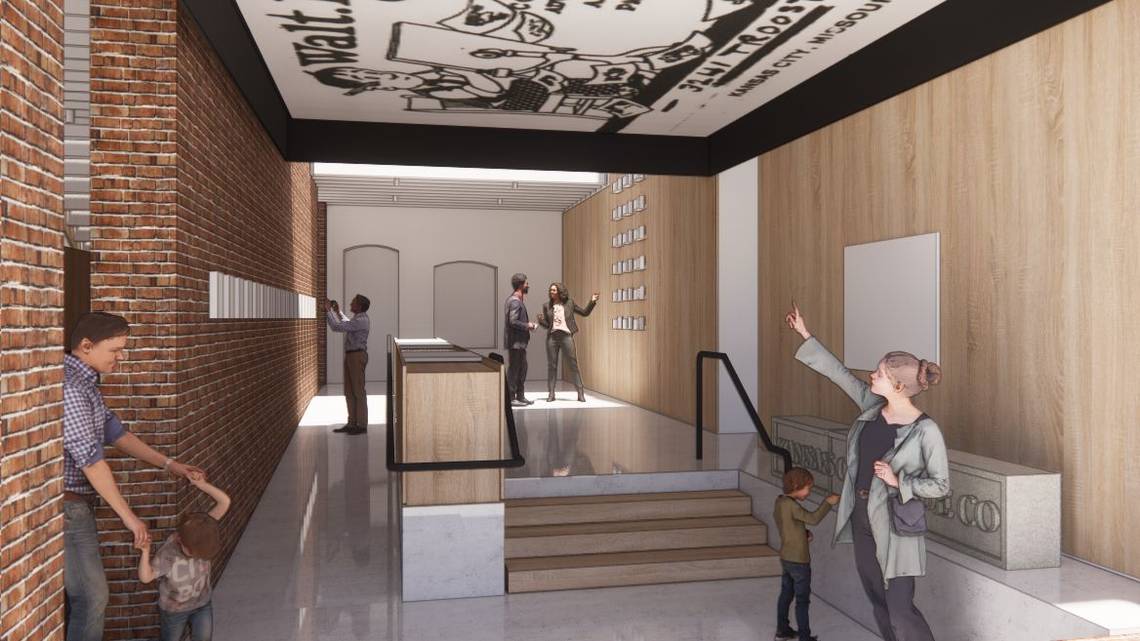
Early Saturday morning on July 31, 2020, a car crashed into the northeast corner of the Laugh-O-gram building. The driver fled the scene leaving an open glass of Margarita and her purse in the car. The wreck caused significant damage to the building which was going through exterior renovations at the time. Above you can see a picture of the damage caused from the car wreck. The concern at that time was that the driver would not be found and that even if she were found, she would not be insured. Fortunately the driver did come forward at a later time and was insured enough to cover the entire damage done to the building. The wreck stalled renovations on the exterior of the building for about six months. 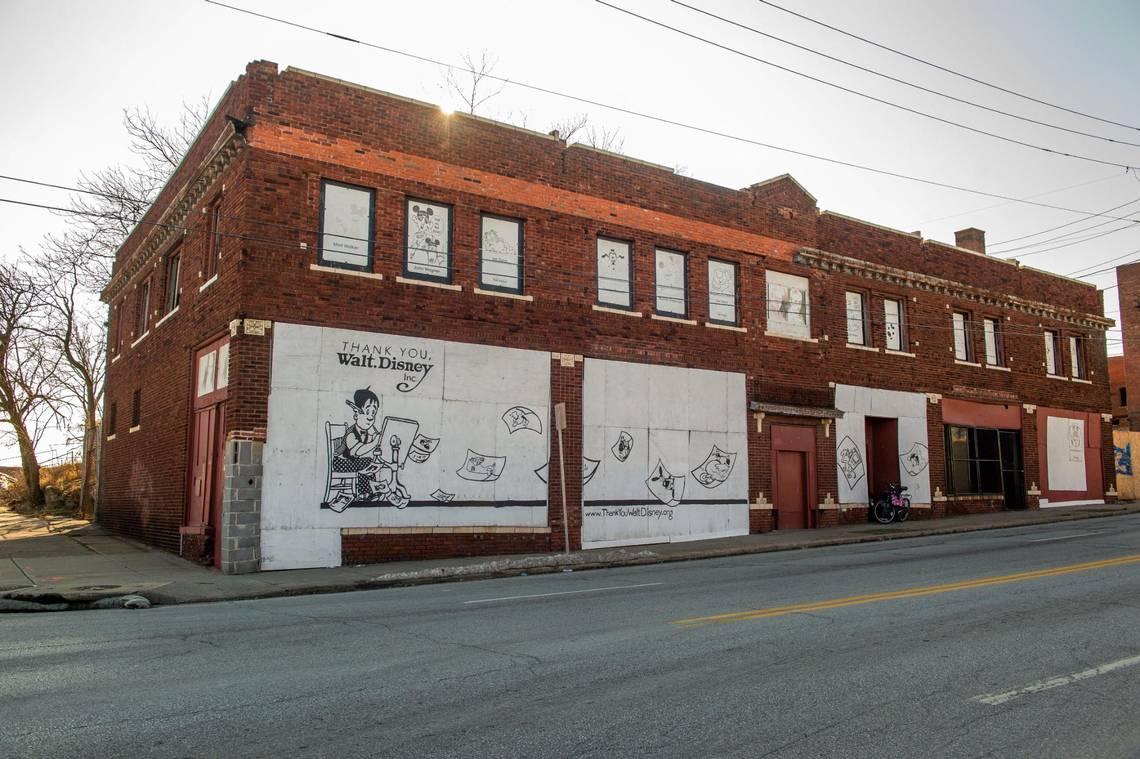 Thank You Walt Disney, the nonprofit devoted to highlighting Disney’s boyhood here and his contributions to entertainment, has released architectural plans for a $5.5 million renovation of the historic McConahy Building at 1127 E. 31st St., just a block east of Troost Avenue. Thank You Walt Disney, Inc. is committed to saving Walt Disney’s Kansas City history and providing a place for art and animation study, while encouraging confidence and entrepreneurial individualism. The efforts to restore the Laugh-O-Gram Studio in Kansas City represent more than just a fascination with Walt Disney and his incredible life. They represent our opportunity to preserve a part of history that would have otherwise disappeared, and will ultimately serve as a catalyst to link education and hope with our youth, enabling them to become true leaders in our community. Thank You Walt Disney, Inc 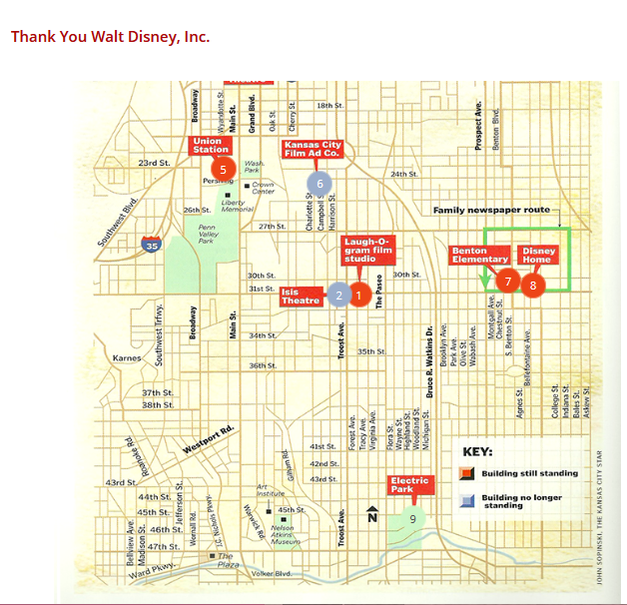
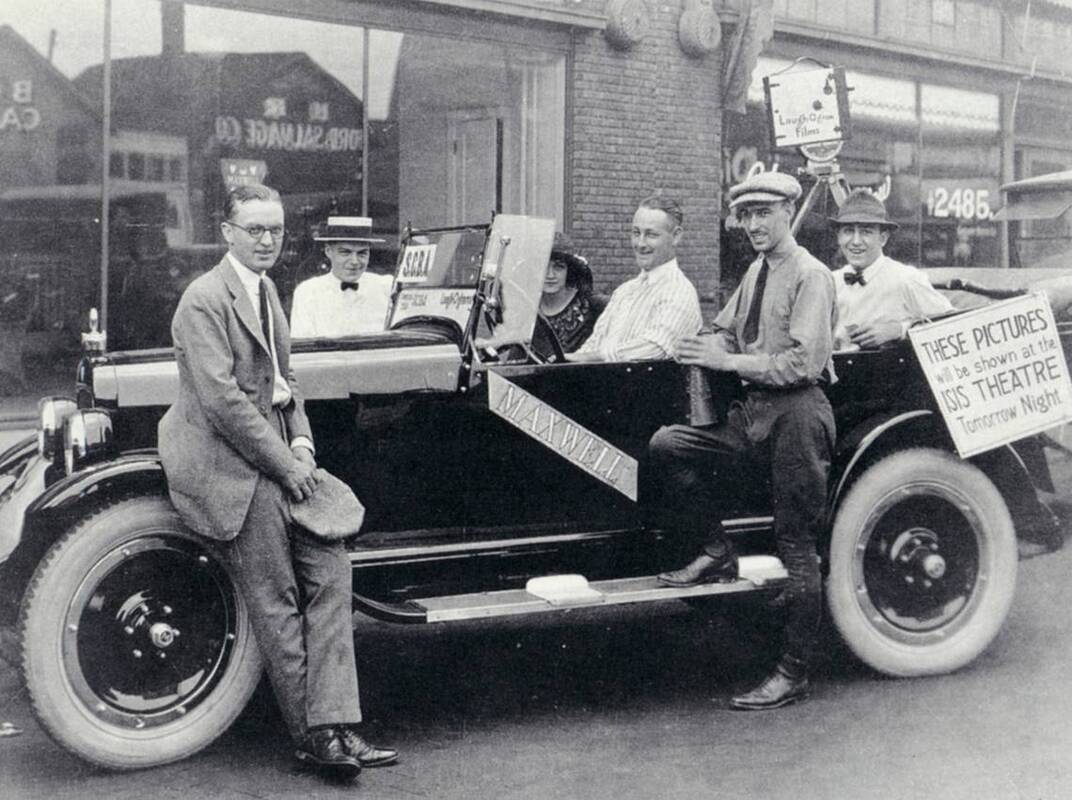 Walt Disney (in back seat with camera tripod) and Laugh-O-gram employees film a Troost Avenue neighborhood parade, probably in 1922. The sign on the car reads, “These pictures will be shown at the Isis Theatre tomorrow night.” Courtesy Walt Disney Co.
 |

Categories
All
Archives
July 2024

|
 RSS Feed