|
When I visited the Walt Disney Studios in Burbank, I was not prepared for the moment that would bring tears to my eyes. There in the lobby stood a towering piece of Disney history — the multiplane camera used to film Snow White and the Seven Dwarfs (1937). I had taken more than one hundred photos that day, but I kept coming back to this incredible machine. To stand in front of the camera that helped Walt Disney prove animation could be taken seriously as cinema was a memory I’ll never forget. What Is the Multiplane Camera? The multiplane camera was one of Walt Disney’s greatest innovations. Unlike traditional cameras that filmed a single flat background, the multiplane camera used layers of painted glass. Foreground, mid-ground, and background layers were each painted separately. The glass plates could be moved independently, so when the camera looked down through them, it created a stunning illusion of depth. This technique made scenes in Snow White — like the glide through the forest up to the Evil Queen’s castle — feel alive and three-dimensional. It was a game-changer. For audiences in 1937, this was unlike anything they had ever seen. Historic Photos of Walt and His Team On the wall beside the display were black-and-white photos showing Walt Disney and his camera crew working with the multiplane camera. In one image, Walt stands proudly with a sheet of drawings in hand while the team operates the massive rig behind him. Another shows the full camera department at work, each man carefully adjusting glass, lighting, or film reels. These photos capture the camera in its prime — a reminder that animation in Walt’s era was a collaborative, industrial effort that required precision, patience, and artistry. Alt text suggestion for blog images: “Walt Disney with multiplane camera team, Burbank Studios, 1930s.” “Disney camera department operating the multiplane camera during production of Snow White.” The Control Panel Up Close The preserved camera includes its original control panel. Today, a little sign with Dopey from Snow White reminds visitors: Please Don’t Touch. Looking closer, I saw the labeled switches: Shoot, Dim, Forward, Reverse, House Lights, Bright. The heavy wheel adjusted the glass planes with absolute precision. Every single movement was done by hand, frame by frame. There was nothing digital about this process. It was physical artistry, powered by a team of skilled camera operators and animators. Reflection on Walt Disney’s Vision
Standing before the multiplane camera, I realized this wasn’t just a piece of equipment — it was a symbol of Walt Disney’s courage to dream big. He believed that animated films could be as moving and cinematic as live-action pictures, and he gave his team the tools to make that vision possible. Without this camera, there may never have been a Snow White, a Bambi, or a Fantasia. As I left, I felt grateful that this piece of history still stands in Burbank, reminding us that with creativity and determination, even the impossible can become reality. Why the Multiplane Camera Matters Today For fans of Disneyland nostalgia, Walt Disney history, and Snow White animation, the multiplane camera is more than a museum piece. It represents the moment animation became more than moving drawings — it became storytelling magic. Visiting it in person was like stepping into Walt’s shoes, if only for a moment, and seeing the world through his vision of innovation and wonder. A Treasure Hunt in Plain Sight One of my favorite ways to reconnect with Disneyland nostalgia is through thrift shops, antique malls, and little out-of-the-way resale corners. These places hold more than dusty shelves — they’re like miniature vaults of forgotten childhood joy. This week, I stumbled onto a set of Disney treasures that immediately pulled me back into the world of Walt’s classics. Snow White and the Seven Dwarfs Figures
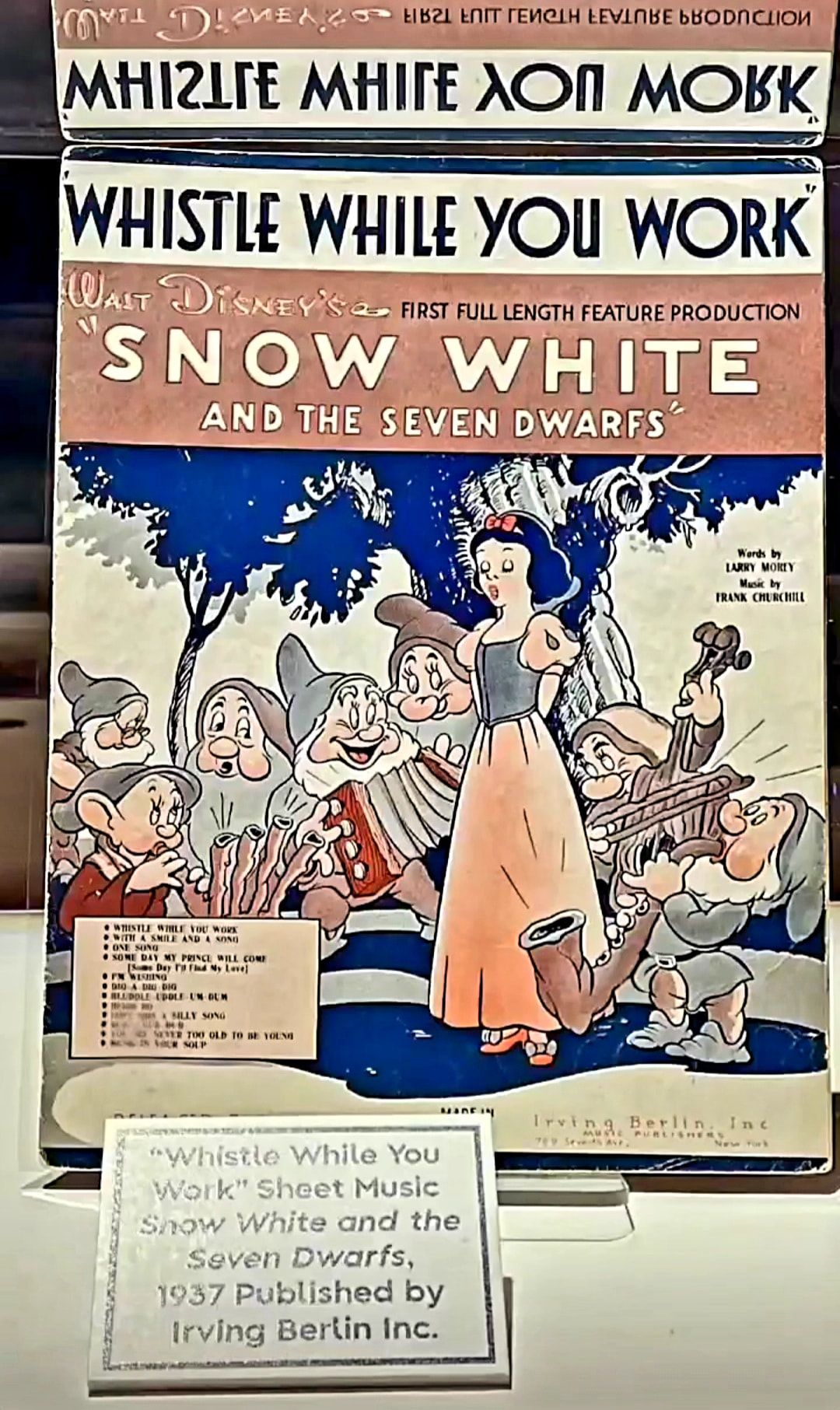
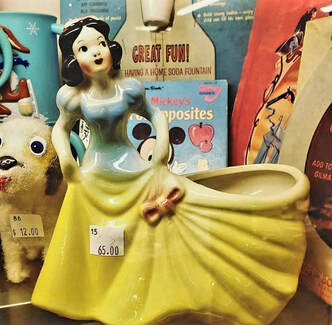
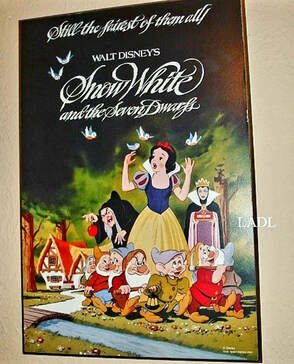
Tucked onto one shelf was a row of colorful Snow White dwarfs figures, stamped Made in Japan. These hard plastic figures aren’t perfectly film-accurate — some are painted in pinks, purples, or greens you won’t see on screen — but that’s exactly what makes them so charming. Back in the 1970s and 80s, Disney licensed toys like this worldwide. The Japan-made figures were affordable, sturdy, and instantly recognizable. For kids growing up in that era, they weren’t just collectibles — they were playtime companions that kept Walt’s very first animated feature alive in living rooms everywhere. Finding multiple dwarfs at once felt like uncovering part of a long-lost set. A complete lineup of all seven can go for $70–100 or more, but even a single dwarf on your shelf tells a story that began in 1937 with Snow White and the Seven Dwarfs and continues in every nostalgic Disney fan’s heart. There’s something timeless about Snow White. Maybe it’s her gentle kindness, her songbird voice, or the way her story feels like it stepped straight out of a hand-painted storybook. But this week, she stepped right into my life in the most unexpected way—and for just $3. A Chance Encounter at the Resale Shop Sometimes, you think about something… and then it appears. That was exactly what happened to me. Just the night before, I found myself thinking about those lovely Brass Key porcelain Disney dolls from the early 2000s. Do you remember them? Not the usual vinyl versions, but the elegant, slightly taller porcelain beauties with soft faces, glassy eyes, and graceful gowns. I thought to myself, "I’d really love to Snow White, to add to my vintage doll and toy room." The next day, I stopped by a favorite local resale shop, just for fun. And there she was. Tucked among some other dolls, at the bottom of the rubbermaid tub, quietly in her soft green and yellow gown, was a 14-inch Brass Key porcelain Snow White doll. She wasn’t in her usual red, yellow, and blue dress—but something even sweeter. This version had a pale pastel green dress with yellow accents and delicate trim. She looked more like a springtime fairytale than a traditional princess, and I instantly fell in love. I picked her up gently and turned her over--$3.00. That was it. A treasure for less than the price of a coffee. A Little Love and a Ribbon When I brought her home, I gave her gown a gentle hand wash and let it dry in the afternoon sun. Her hair was still styled beautifully, and her porcelain face was in perfect condition. She was just missing one tiny detail: a pink ribbon that I believe once adorned the front of her dress. So I added one myself. A Spark of Nostalgia
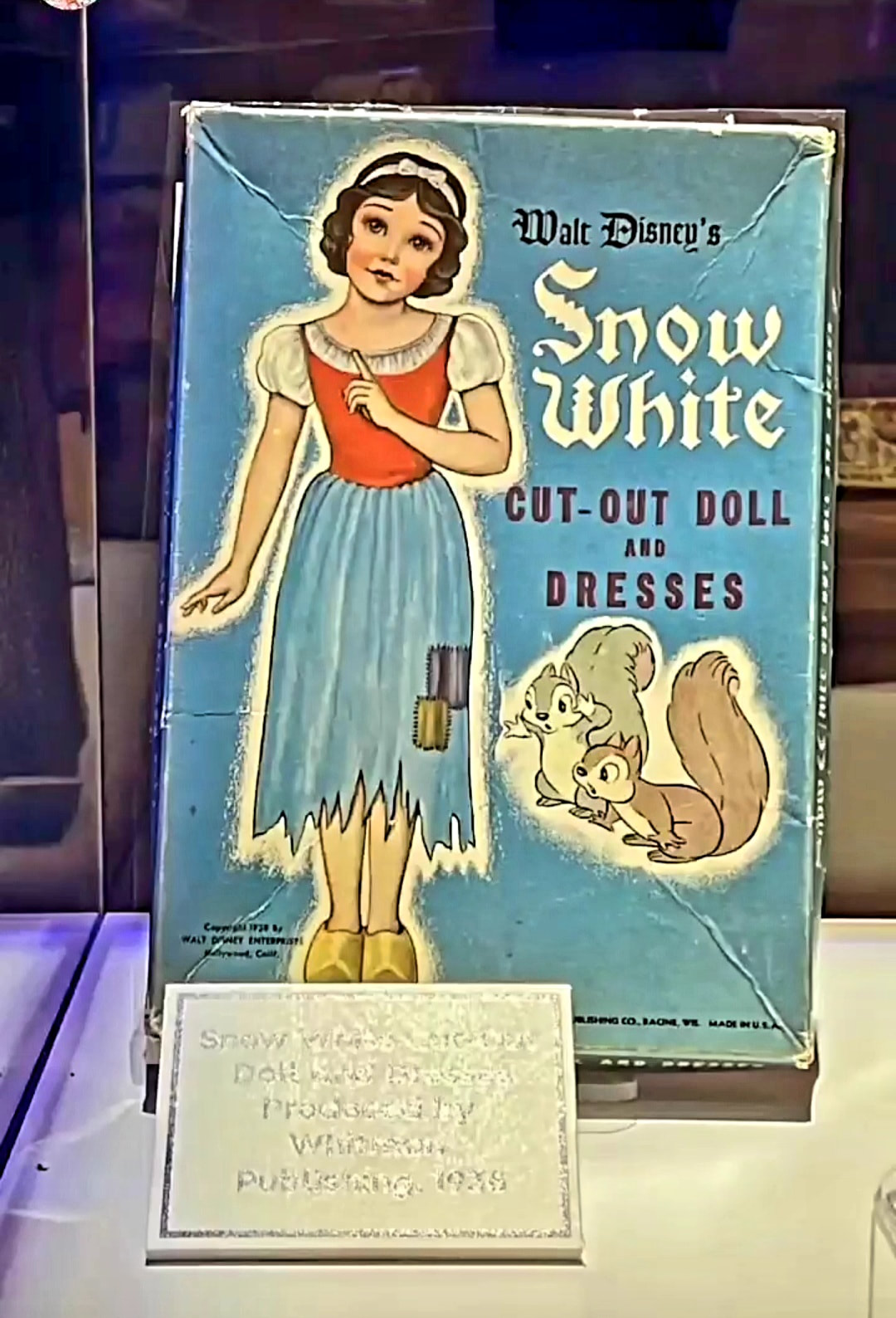
Holding this doll again brought back such a flood of memories. The Brass Key dolls were never overly flashy. They had a gentle elegance to them—rosy cheeks, delicate features, and gowns that looked like they belonged in a Victorian nursery or an old Disney catalog. They weren’t designed for rough play but for display and storytelling. Now that Snow White has come home, I’ve found myself itching to search for Cinderella and Aurora to the collection—maybe even a few more princesses from the same line if I stumble across them. There’s something about the porcelain series that feels quieter, more poetic, and perfectly in step with the kind of vintage Disney I love most. For now, Snow White is settling in. I’m still deciding exactly how I want to display her (I have some ideas involving storybook backdrops and soft golden lighting—more on that soon!). But this one sweet find has absolutely rekindled a passion for collecting the gentle, forgotten treasures from Disney’s past. Sometimes the best magic happens when you’re not looking for it—but your heart is ready to receive it. Stay tuned—once I find Cinderella and Aurora, I’ll be sure to share their stories too. In a dusty corner of mid-century toy history, there lies a forgotten gem—one that tells a quiet story of childhood creativity, homemaking charm, and Disney magic. It's the Little Betty "Snow White" Sewing Machine, a 1950s toy that has nearly vanished from view, yet once brought fairytale dreams to life with every turn of the hand crank. This rare model, manufactured in Kent, England by E.M. Gheysens and distributed through the Straco Toy Company, was part of the cherished Little Betty line. What set this version apart was its Disney license. Labeled "Model W4D," this machine came with something special: Snow White herself, lovingly illustrated on the original box, stitching trousers for the Seven Dwarfs. Printed in warm, pastel tones with the caption "Sews Like Mother's," the box art captured everything a 1950s child might hope for in a toy—domestic beauty, imagination, and storybook wonder. The machine itself was simple: typically cream or white on a soft blue base, with subtle Disney branding (if any) and no overt logos on the unit itself. But the magic was in the packaging, which now serves as a collector’s dream and a nostalgic treasure. According to resources like Brighton Toy Museum and the Filmic Light Snow White Archive, the Snow White model was among the final designs in the Little Betty line—a final bow for a toy manufacturer trying to stay afloat by aligning with Disney’s iconic character. Yet few remain today, and even fewer still in their original boxes. As a lifelong lover of vintage Disney, sewing, and storytelling, discovering this sewing machine felt like uncovering a secret from Walt’s own enchanted archive. It pairs beautifully with the original 1938 McCall’s Snow White dress pattern that I highlighted during Snow White Month earlier this year. That pattern—released by Walt Disney Productions shortly after the film’s premiere—gave young girls the chance to sew their very own princess dress, echoing the same cottage-core charm that this sewing machine represents. Together, these pieces represent more than merchandise. They symbolize a time when creativity was cultivated through handiwork and play—when a child might become a princess not by wearing something store-bought, but by sewing it herself. I’ll be exploring this further on Patreon in my upcoming Once Upon a Stitch: The Cottage Years series, featuring handmade Snow White-inspired wardrobe pieces, storybook printable designs, and perhaps even a recreated pattern card inspired by this very machine. It’s my way of honoring the sacred quiet of creativity, and the legacy of Disney’s first princess. Because even Snow White needed a needle and thread. References & Inspiration:
Filmic Light Archive Brighton Toy Museum: Little Betty Model W4D |
Welcome to a place where Disney nostalgia meets storytelling magic. I create uplifting, history-rich content celebrating Walt Disney’s original vision and the golden age of Disneyland. From forgotten dining spots to untold stories of Walt’s creative team, this blog is a tribute to imagination, innocence, and timeless joy.
Rediscover wonder with me — one story at a time. Amazon storefront Categories
All
Archives
May 2026
|