|
The History of Blow-Mold Sippers In the mid-20th century, Disney licensed companies to produce a wide range of blow-mold plastic figures. These hollow, lightweight figures were inexpensive to make and incredibly durable, which is why so many children carried them around at picnics, birthday parties, and even theme park visits. Mickey and Minnie sippers blurred the line between toy and souvenir — you could drink from them, display them, or simply keep them as playthings. Because they looked so much like the popular coin banks of the same era, many ended up on bedroom shelves long after their straws disappeared. Why Finding the Pair Matters What makes these particular sippers so special is the fact that Mickey and Minnie survived together. Usually, these cups were sold separately, and families might have kept one or the other. Over time, many cracked, faded, or were discarded. To find the pair in such good condition — still vibrant in their painted details — is rare. Displayed side by side, they radiate the cheerful energy of Main Street U.S.A., as if they’ve been waving from a parade float for decades. A Nostalgic Display Piece These Mickey and Minnie sippers have become part of my Technicolor Memories collection. They’re not just collectibles — they’re conversation starters, memory keepers, and little time capsules of Disney merchandising history. Whether you grew up with one on your dresser or you’re just discovering them now, they’re a reminder of how Disney magic always found its way into the everyday. Early licensed Disney plush toys on display at the 50th Anniversary of the Walt Disney Archives exhibit. Top right: Kay Kamen’s original Mickey Mouse plush, one of the first mass-produced designs under his licensing deal. Lower shelf: Charlotte Clark–designed Mickey, Minnie, and Goofy dolls—hand-stitched and charmingly oversized, with features based on early animation models Disney Archives 50th Anniversary Exhibit – Bowers Museum, Santa Ana, California 📸 Featured: My original photo of early Disney plush dolls A Personal Glimpse Into Disney History There’s something quietly magical about seeing childhood legends in their earliest, most handmade form. During my visit to the Bowers Museum for the 50th Anniversary of the Walt Disney Archives, I was lucky enough to capture this image. Behind the glass, stood the soft-stitched beginnings of a merchandising empire. From Mickey and Minnie to Goofy and even Bambi, these early plush dolls felt like a direct handshake from Disney’s past. But what many fans don’t realize is that these dolls weren’t made in a factory. They were born in the hands of a woman named Charlotte Clark. 🧵 Who Was Charlotte Clark? Charlotte Clark was a seamstress from Los Angeles with a simple sewing machine and an eye for character. In 1930, she sewed the very first Mickey Mouse doll—not in a studio, but at her home. At the time, Mickey Mouse had only just debuted in Steamboat Willie (1928) and The Barn Dance (1929), yet demand for Mickey-themed toys was already growing. Walt and Roy Disney were so impressed with Clark’s prototype that they immediately arranged to license it—and bring her directly into the studio. She soon opened the “Doll House” next to the original Hyperion Studio, where she and a team of seamstresses hand-produced hundreds of Mickey dolls per week. Charlotte’s hand-sewn patterns were also sold as kits through department stores so families could make their own Mickeys at home during the Great Depression—a heartfelt mix of economy and imagination. Kay Kamen & The Mickey Mouse Watch
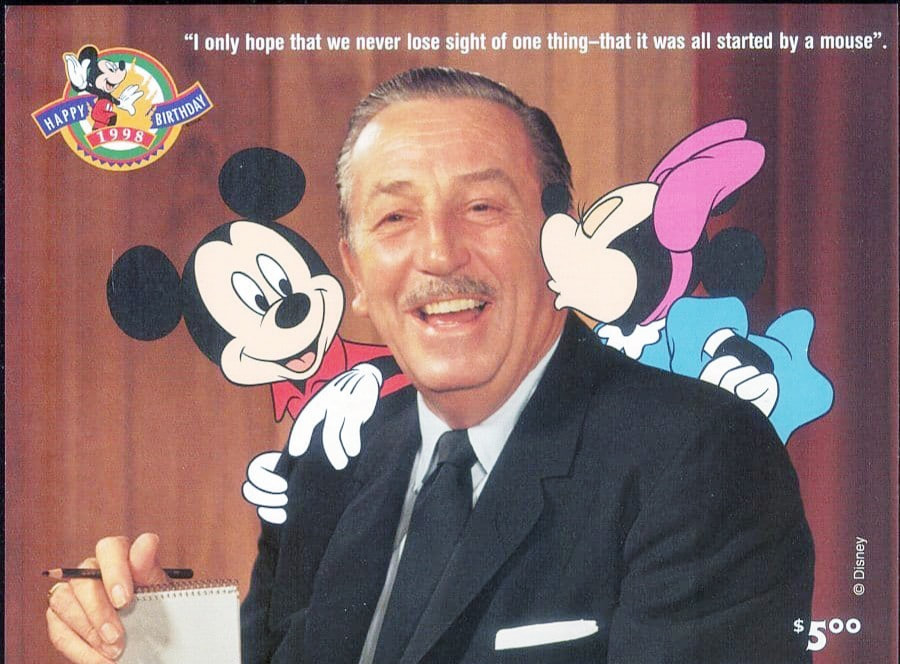
While Charlotte Clark shaped Disney’s earliest plush toys, another visionary named Kay Kamen helped scale Mickey’s reach to the world. In 1933, Kamen negotiated licensing rights for all Disney merchandise and brought the world the Mickey Mouse watch, sold at the Chicago World’s Fair for $2.50. His mass-market licensing deals brought financial stability during the Depression—and Mickey into millions of homes. His plush doll version (seen in the upper right of Image One) was an evolution of Charlotte Clark’s design but aimed for department stores nationwide. 🧵 A Stitch in Time Charlotte Clark’s dolls were more than toys. They were stitched love letters to a rising star named Mickey Mouse. And through Kay Kamen’s licensed designs, that star rose to global heights. Standing in front of that display case at the Bowers Museum, I didn’t just see plush dolls—I saw survival, ingenuity, and heart. Walt once said it all started with a mouse. But perhaps, it really started with a needle, thread, and the hands of Charlotte Clark. 🧵 Bonus Idea: Make Your Own Vintage Mickey Doll Would you like a printable pattern or display tag inspired by Charlotte Clark’s designs? The First Licensed Mickey Mouse Product
In the heart of the Great Depression, when Americans were struggling to get by, something surprising happened: a cartoon mouse started showing up on people's wrists. In 1933, Walt Disney granted a license to the Ingersoll-Waterbury Clock Company to produce the first officially licensed Mickey Mouse watch. It debuted at the 1933 Chicago World’s Fair and sold for $2.50—a steep price for the time, but the public loved it. The smiling, gloved hands of Mickey Mouse ticked away the hours, and within two years, over 2.5 million watches had been sold. The Genius of Kay Kamen Much of this success can be attributed to Kay Kamen, whom Walt hired that same year to handle all Disney licensing. Kamen had a gift for turning characters into products, and products into profit. His deal helped ensure that Disney retained creative control while still generating much-needed revenue. A Mouse with a Mission: Surviving the Depression Kamen and Disney didn’t stop with watches. During the 1930s, children could find Mickey Mouse on:
A Legacy of Licensing Thanks to the early success of licensed merchandise, Walt was able to fund new animation projects, maintain his staff, and keep dreaming during an era when most studios were cutting back. The Mickey Mouse watch didn’t just tell time—it bought time. It gave Walt Disney the margin he needed to build the empire we know today. 📸 Want to See the Watch? Vintage Mickey Mouse watches can still be found in private collections and museums. If you ever see one in person, take a moment to appreciate what it represents: imagination, resilience, and the faith to keep going—even in hard times. WOW! Look at this amazing vintage Mickey and Pals school bus lunch box by aladdin industries! $65 at an antique shop.
1933 Ingersoll-Waterbury, a Connecticut clock maker on the brink of bankruptcy, sells the first Mickey Mouse watch. The success of these watches will rescue the company! The first Mickey Mouse watches featured a smiling Mickey at the center, with his hands serving as the hour and minute indicators, and three smaller Mickey Mouse images on the dial. Priced at $3.25, the watch was affordable for a broad audience, with a less expensive pocket watch version also available. The Mickey Mouse watch was an enormous success, selling over 2.5 million units in the first two years, and helping to save the Ingersoll-Waterbury Company from financial ruin. Its popularity marked a major milestone in the marketing of character-themed merchandise, setting a precedent for future licensing deals between entertainment companies and consumer goods manufacturers. I DO NOT own one of these collector watches, but I do own a simple Mickey Mouse watch that I wear every time I visit Disneyland.
|
Welcome to a place where Disney nostalgia meets storytelling magic. I create uplifting, history-rich content celebrating Walt Disney’s original vision and the golden age of Disneyland. From forgotten dining spots to untold stories of Walt’s creative team, this blog is a tribute to imagination, innocence, and timeless joy.
Rediscover wonder with me — one story at a time. Amazon storefront Categories
All
Archives
January 2026
|